
 Order Pickup


92.8 %
Of plastic bottles are recycled into new raw material (2025)
A recent study shows that Infinitum’s recycling system is better for the climate and the environment than comparable reuse systems.

A recent Life Cycle Assessment shows that Infinitum’s recycling system is more climate- and environmentally friendly than an equivalent reuse system would be.
Download the Life Cycle Assessment92.8 %
Of plastic bottles are recycled into new raw material (2025)
97.2 %
Of aluminum cans are recycled into new raw material (2025)
5 times
A plastic bottle can be reused
96 %
Lower CO2 emissions than new production
Over 90% of all bottles and cans in Norway are returned for deposit and given a new lease on life instead of becoming waste. As a result, the deposit system is one of the world’s greatest environmental successes. And best of all: the industry itself covers both the costs and the responsibility.
Infinitum documents all costs, resource use and the energy efficiency of the deposit system. This is done for transparency reasons – and to keep improving all the time!
For consumers, it costs an average of NOK 0.04 per unit, precisely because the system is so simple and well-designed. You can bring your empty bottles and cans to the grocery store when you are going there anyway. At the grocery store, the deposited bottles and cans are compressed so they take up less space during transport. Many of the trucks that pick up the deposited bottles and cans are the same ones that deliver goods to the grocery store.
This makes the Norwegian deposit system one of the most efficient in the world!
New and recycled plastic have slightly different properties. If only recycled plastic is used, the new bottles may have a grayish color. We want to recycle as much as possible, but we need a little bit of new plastic in each batch to ensure consistent results. We have found that a good mix is approximately 80% recycled and 20% new plastic. With a small amount of new material added each time, the plastic can be used to make new bottles five times in our system.
Emissions from the deposit system are being reduced.
We are making the recycling of bottles and cans even more efficient.
We are developing a more circular system for beverage containers.
Our system is based on a circular economy in which materials are reused instead of being discarded. This results in less waste and lower CO₂ emissions.
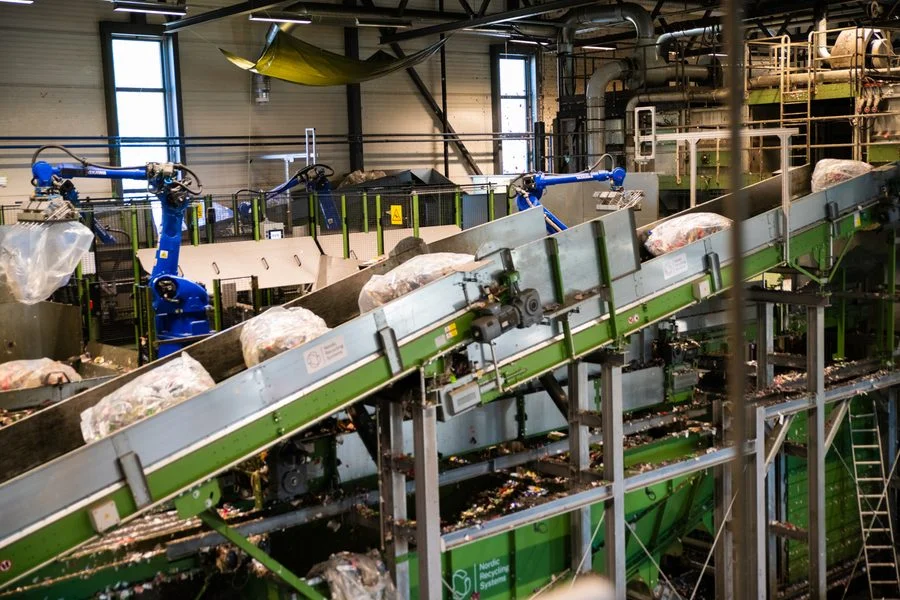
Plastic bottles are sorted and recycled at our facilities. They are cleaned, compressed and then recycled into new plastic raw material by our partners.
Aluminum cans go through the same system. They are sorted, cleaned and compressed before being turned into new aluminum raw material.
Together, we are safeguarding the environment for future generations
In collaboration with NORSUS Norwegian Institute for Sustainability Research (formerly Østfold Research), we have developed Life Cycle Assessments (LCA) that provide a comprehensive overview of the environmental impact of cans and bottles – from raw material extraction and production through to use, deposit and recycling. The analyses also include transportation and energy use at every stage.
Comparison of recycling and incineration of aluminium cans
Comparison of recycling and incineration of plastic bottles
LCA of beverage container production, collection and treatment systems
Supplementary analysis, Norsus
An empty bottle is full of energy, and many people are surprised by how much the environment benefits from having a deposit system. See how much energy you save by returning your half-liter bottles.
How many bottles do you want to return for deposit?
(0.5-liter bottles)
Panter du �n flaske, sparer du nok energi til � fullade mobilen 70 ganger