

 Order Pickup

"There's been a lot of sorting through the residual waste, yes," admits Asbjørnsen.
He is the managing director of Oppegård Golf Club, which has an 18-hole course, over 2,000 members, and a long waiting list. Asbjørnsen says the whole summer has seen full days of play, with hundreds of people on the course.
A round of golf typically lasts four to five hours. Many players bring water bottles, soft drinks or other beverages out onto the course. Once the bottles are empty, the question arises of what to do with them. Although there are some containers for this purpose, they aren't always used.
"We have residual waste bins placed at selected holes, but that doesn't really help those who want to get rid of empty bottles and cans there and then," says Asbjørnsen.
Or rather, the golfers do get rid of them – but the empties end up in the residual waste bins, where they shouldn't be.
Surprised by the number of bottles in the trash
Eventually, more than just the people working at the golf course took notice of this. Sissel Udahl, who walks her dog in the area every day, had noticed the same thing.
"I live close to the golf course and sometimes use the rubbish bins for dog waste bags. That's how I discovered there were an extreme number of empty bottles in the residual waste," she says.
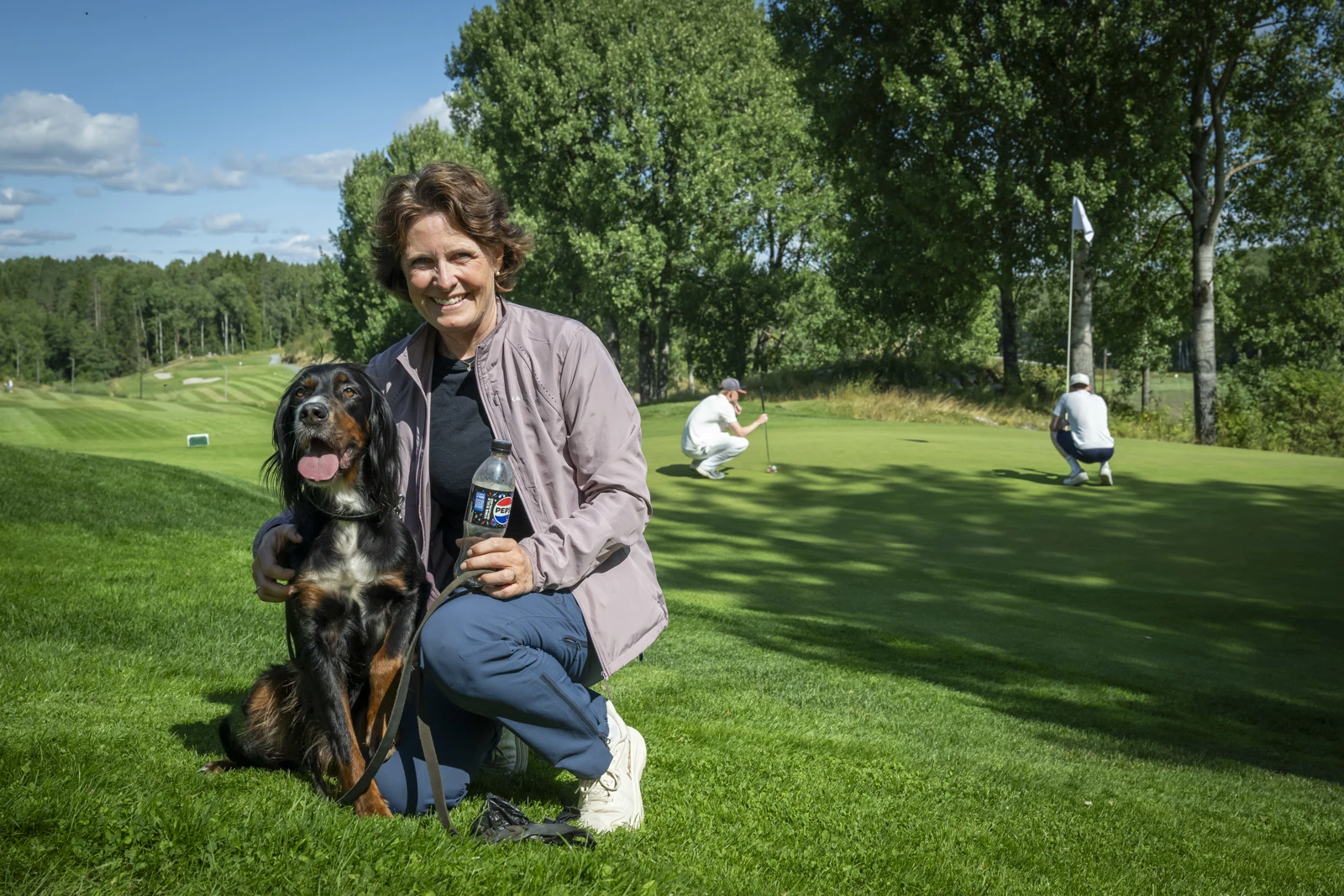
Sissel says that on just one walk, she picked out 30 cans from two rubbish bins at the golf course.
"That's when I thought someone needs to know about this. It's sad that people don't seem to care, and in my view this applies especially to young men at the golf course. Maybe they haven't had it instilled in them the way those of us who are a bit older have?" she asks.
Sissel's phone call was, in many ways, the nudge golf course manager Asbjørnsen needed.
"When Sissel got in touch and asked what we could do, we decided to find a better solution," he says.
The club has now set out its own containers for deposit returns.
"The goal is for golfers to easily be able to return bottles and cans where they are, instead of throwing them in the residual waste. Golfers should have every ability to hit the right hole, after all," he jokes.
Wants to inform all golf clubs
According to Infinitum, which operates Norway's deposit return system, Oppegård Golf Club is hardly alone in facing this challenge.
"Golf courses are a bit like cinemas, sports facilities and recreational areas. People are on the move, buy something to drink, and need a simple place to put the empty bottle once it's finished. If there's no solution for deposit returns, it often ends up in the residual waste," says Marketing Director Randi Varberg Haavik.
She explains that collection solutions already exist and are used by, among others, schools, sports teams, associations and other organisations. The containers are placed where the need is greatest, and when they are full, they are collected and the deposit is paid out.
"Many simply aren't aware that this option exists. That's why we also believe many golf clubs face the same challenge Oppegård did," says Varberg.
Today, more than 1,200 teams, associations and schools use the scheme, but Infinitum now wants to look more closely at how more golf clubs can be informed about the offer.
"Oppegård shows that simple measures can make it easier to keep deposits circulating. Now we want to get a better overview of the need and make more golf clubs aware of the possibilities that exist," says Varberg.